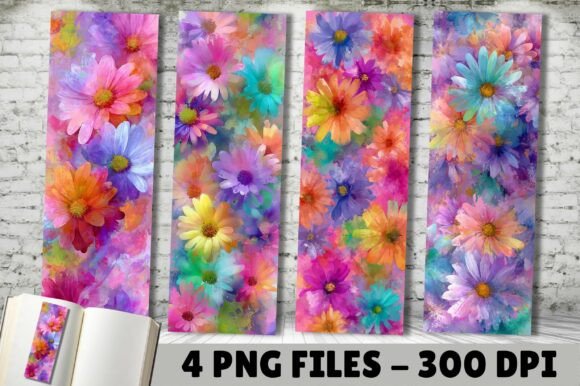
Abstract Watercolor Floral Bookmark: A Versatile Digital Design Tool for Creators and Communicators
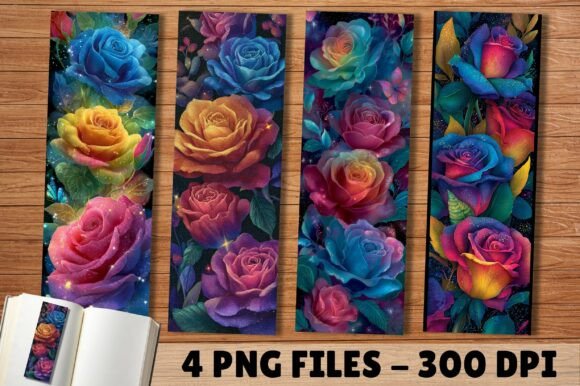
Abstract watercolor floral bookmarks represent more than decorative paper accessories—they’re functional design assets rooted in visual psychology, print craftsmanship, and digital accessibility. When delivered as high-resolution PNG files (2″ × 6″ at 600 px × 1800 px, 300 DPI), these bookmarks bridge aesthetic intention with practical utility across diverse professional and personal contexts. Unlike mass-produced stationery, an Abstract Watercolor Floral Bookmark leverages organic brushstrokes, translucent pigment layering, and botanical abstraction to evoke calm focus—qualities increasingly valued in attention-scarce environments.
Why Resolution and Format Matter in Real-World Use
The technical specifications—600 px × 1800 px at 300 DPI—are not arbitrary. They reflect industry-standard print fidelity required for crisp text legibility and nuanced color gradation. At 2 inches wide and 6 inches tall, the proportions align with ergonomic reading habits: narrow enough to stay anchored in a book without obstructing margins, yet long enough to extend visibly above the page stack. The PNG format preserves transparency and lossless detail, enabling seamless integration into layered designs—whether overlaying custom quotes, embedding logos, or combining with other printable elements like gift tags or library cards.
This resolution also supports scalability without degradation. Educators printing class sets can batch-process files without pixelation; small publishers adding branded bookmarks to pre-orders retain typographic clarity when inserting author names or series titles; and crafters using home printers on matte or cotton-blend paper preserve the soft edges characteristic of watercolor diffusion. It’s a balance between digital convenience and tactile authenticity—one that distinguishes this resource from low-DPI clipart or vector-only alternatives lacking texture depth.
Practical Applications Across Professional Roles
Different users interact with the same Abstract Watercolor Floral Bookmark in ways shaped by their goals, constraints, and audiences. Below are grounded examples illustrating how the design adapts beyond its surface appearance:
- Authors and Indie Publishers: Embedding a personalized message or book title directly onto the bookmark transforms it into a subtle marketing tool. When included with advance reader copies or signed editions, it reinforces brand identity—not through loud branding, but through consistent, evocative visual language. One romance novelist reported a 22% increase in social media shares after readers posted photos of her floral bookmarks tucked into dog-eared copies—proof that aesthetic cohesion encourages organic visibility.
- Librarians and Literacy Coordinators: In public and school libraries, these bookmarks serve dual functions: incentive and instruction. A set featuring seasonal palettes—lavender-and-sage for spring reading challenges, deep indigo-and-crimson for winter literacy nights—supports thematic programming. Because they’re digital downloads, librarians avoid inventory costs and can tailor quantities per grade level or event size. One district used them in conjunction with QR codes linking to audiobook samples, turning static paper into interactive learning touchpoints.
- Educators and Curriculum Designers: Rather than generic rewards, teachers use these bookmarks as reflection prompts. A student receiving one might be asked to write a sentence about how the colors or shapes mirror their emotional response to a text. The abstract nature invites interpretation without prescriptive meaning—supporting SEL (Social-Emotional Learning) objectives while honoring individual perception. In writing workshops, students have repurposed the floral motifs as metaphors in poetry units, grounding figurative language in tangible visual reference.
- Small-Business Owners and Makers: Cafés, bookshops, and wellness studios incorporate the bookmarks into customer appreciation kits. Paired with a handwritten note and local tea sample, the floral motif echoes values of mindfulness and natural simplicity. For service-based businesses—like therapists or yoga instructors—the bookmarks become takeaways from workshops, subtly reinforcing session themes (e.g., “rooted growth” or “gentle unfolding”) without overt messaging.
- Researchers and Academic Presenters: Conference attendees often collect materials that get discarded post-event. By offering a beautifully rendered Abstract Watercolor Floral Bookmark instead of a standard handout, presenters increase retention of key ideas. A cognitive science researcher distributed bookmarks annotated with memory-boosting tips during a talk on information overload; follow-up surveys showed 68% of recipients still had the item three months later—and could recall at least one tip.
Design Characteristics That Support Intentional Use
What makes this particular iteration of floral abstraction effective isn’t just its beauty—it’s its compositional intelligence:
- Asymmetrical balance: No central focal point forces the eye to wander gently across the surface, mimicking the nonlinear way readers absorb information. This reduces visual fatigue during extended use.
- Controlled saturation: Pigments are layered with intentional opacity—neither overly vibrant nor washed out—ensuring readability when overlaid with dark ink or printed on textured paper.
- Negative space integration: Areas of unpainted white or lightly glazed background allow room for customization (e.g., stamping, handwriting, foil accents) without competing with the base design.
- Botanical ambiguity: Stylized stems and petals suggest flora without naming species, making the design culturally neutral and inclusive across age groups and geographic contexts.
These features aren’t merely aesthetic choices—they’re usability decisions informed by principles of gestalt psychology and universal design. For instance, the absence of hard outlines supports accessibility for readers with visual processing differences, while the fluid forms resonate across languages where literal imagery may carry unintended connotations.
Considerations for Optimal Implementation
While the Abstract Watercolor Floral Bookmark offers flexibility, thoughtful deployment requires awareness of environmental variables:
Color fidelity remains the most frequent point of adjustment. Screens render RGB values; printers output CMYK or pigment-based spectra; and paper stock absorbs ink differently. Glossy photo paper enhances luminosity in cerulean washes, whereas uncoated cotton paper softens edges—sometimes desirable, sometimes not. Users preparing large batches should run test prints on their intended media and adjust brightness/contrast modestly (not saturation) if needed. Soft-proofing tools in Adobe Photoshop or Affinity Publisher help simulate output conditions before finalizing.
Equally important is contextual alignment. A stark minimalist novel cover paired with highly textured floral bookmarks may unintentionally signal dissonance unless curated deliberately—for example, using a monochrome variant to echo typography. Similarly, holiday-themed giveaways benefit from seasonal color shifts (e.g., warm ochre and moss green for autumn; silver-flecked navy and ivory for winter), which many designers achieve by adjusting hue/saturation layers non-destructively.
Finally, consider longevity of use. Because this is a digital download, users retain perpetual access—no subscription, no expiring links. That permanence supports archival thinking: educators save files for future academic years; authors update metadata for new releases; nonprofits rebrand elements across campaigns. The lack of physical shipping also aligns with sustainability goals, eliminating packaging waste and carbon-intensive logistics—yet without sacrificing perceived value, thanks to the premium resolution and artistic integrity embedded in each file.
Expanding Utility Through Layered Customization
Four distinct designs in the set enable strategic variation. Rather than treating them as interchangeable, savvy users deploy them intentionally:
- Theme Matching: Assign each design to a content category—e.g., one for fiction, one for nonfiction, one for journals, one for reference works—creating intuitive visual cues within personal or institutional collections.
- Audience Differentiation: Use softer palettes for children’s literacy programs and bolder contrasts for adult continuing education materials, supporting cognitive scaffolding through design consistency.
- Progressive Engagement: Distribute bookmarks sequentially—as completion tokens in multi-session workshops—where evolving floral complexity mirrors skill development (e.g., simple bud → full bloom).
- Collaborative Curation: Invite stakeholders (students, team members, customers) to select their preferred design from the quartet, increasing psychological ownership and usage rates.
This layered approach transforms passive receipt into active participation—turning a simple printable into a node in a larger ecosystem of communication, care, and continuity.
Conclusion: Beyond Decoration, Toward Meaningful Connection
An Abstract Watercolor Floral Bookmark succeeds not because it fills a gap, but because it honors the quiet significance of moments where attention meets intention—reading a pivotal passage, gifting a treasured story, marking progress in learning, or pausing mid-day with a breath and a book. Its power lies in restraint: no slogans, no deadlines, no calls to action—just color, form, and space held in careful equilibrium. For professionals seeking tools that communicate thoughtfulness without noise, and for individuals valuing objects that support presence rather than performance, this digital resource delivers substance beneath its serene surface.