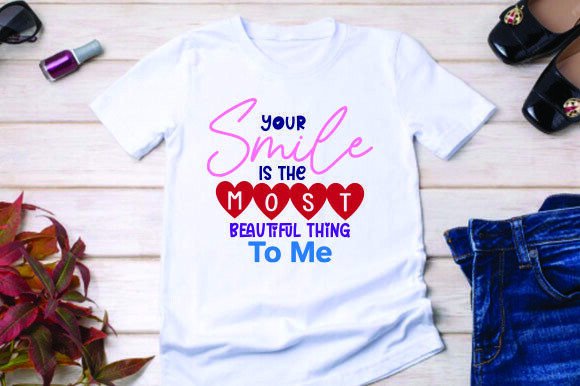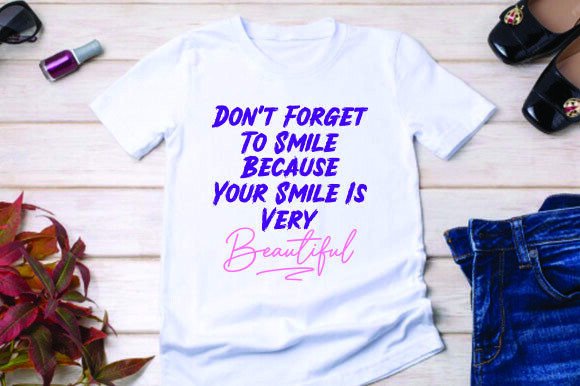
Don’t Forget to Smile Because Your Smile
In a world increasingly shaped by digital interfaces, rapid notifications, and back-to-back commitments, something quietly powerful remains unchanged: the human smile. It’s not just an expression—it’s a micro-moment of connection, resilience, and authenticity. Don’t Forget to Smile Because Your Smile isn’t just a cheerful phrase; it’s a gentle reminder rooted in behavioral science, design psychology, and everyday human experience. When paired with thoughtful visual execution—like the clean, uplifting typography and balanced composition found in this design—it becomes more than decoration. It becomes wearable intention.
Why This Message Resonates Now More Than Ever
We’re living through a cultural recalibration around well-being—not as a luxury, but as infrastructure. Professionals juggle hybrid work schedules, educators nurture attention in fragmented learning environments, and creators navigate algorithm-driven platforms where positivity competes with noise. In that context, messages like Don’t Forget to Smile Because Your Smile Is Very Beautiful land differently today. They’re not naive optimism—they’re grounded affirmations. Research in positive psychology shows that even *posed* smiling can nudge mood regulation and social perception. And when that sentiment appears on a t-shirt, mug, or sticker, it transforms from private thought into shared, low-pressure encouragement.
This shift isn’t about plastering positivity everywhere. It’s about choosing sincerity over slogans. The design avoids clichéd clipart or exaggerated fonts. Instead, its 4500×5400 px, 300 dpi resolution and transparent PNG format support real-world versatility—whether printed on organic cotton tees for a wellness brand, applied as a vinyl decal on a therapist’s office window, or scaled for a minimalist tote bag sold at a local makers’ market.
Design That Serves Purpose—Not Just Aesthetics
What makes this file set practical for creators and small businesses isn’t just its visual appeal—it’s the intentional range of formats included. The editable AI file lets graphic designers tweak spacing, color, or font weight without quality loss. The SVG ensures crisp rendering at any size—ideal for web use or laser-cut signage. The high-res JPG delivers consistency across print-on-demand platforms like Printful or Gelato. And the transparent PNG? That’s the quiet workhorse: ready for mockups, layered over product photos, or dropped directly into Canva templates for social posts or email headers.
Consider a freelance educator launching a mindfulness workshop series. They could use the AI file to add their logo beside the quote, export as SVG for a clean website banner, then drop the transparent PNG into a Canva slide deck—no design degree required. Or a café owner might print the JPG onto ceramic mugs, pairing “Don’t Forget to Smile Because Your Smile” with locally roasted coffee—a subtle, non-intrusive brand voice that aligns with customer values around warmth and presence.
From Trend to Tool: How Motivational Typography Fits Modern Creative Workflows
Funny motivational quotes and inspirational typography aren’t trending because they’re new—they’re surging because they’ve become *functional*. Unlike static stock imagery, well-crafted quote-based designs serve multiple roles: social media hooks, merch anchors, classroom visuals, podcast show notes accents, and even internal team morale tools. The phrase Don’t Forget to Smile Because Your Smile works across contexts precisely because it’s personal without being prescriptive. It doesn’t say “Be happy”—it acknowledges effort (“Don’t Forget”) and affirms inherent worth (“Your Smile Is Very Beautiful”). That nuance matters.
That’s why creators are moving away from generic “Good Vibes Only” templates toward phrases with quiet specificity. It’s also why file compatibility is no longer optional—it’s essential. One ZIP folder containing JPG, AI, SVG, and transparent PNG means less time converting, troubleshooting, or re-exporting. For a blogger designing free downloadable resources, that’s five minutes saved per project. For a Shopify store owner uploading 20+ designs weekly, it’s hours reclaimed—time redirected toward customer service, content planning, or rest.
Real-World Use Cases Beyond T-Shirts
Yes, this design shines on apparel—but its utility extends further, thanks to its technical flexibility and emotional tone:
- Classroom & Therapy Settings: Printed on durable cardstock as laminated affirmation cards, the transparent PNG allows teachers or counselors to layer it over calming background images—supporting SEL (social-emotional learning) without visual overload.
- Small Business Branding: A boutique fitness studio might use the SVG version to animate the phrase into a 5-second Instagram Story highlight reel—pairing movement with message.
- Digital Content Creation: Bloggers writing about burnout recovery or creative sustainability can embed the transparent PNG into article headers or email footers—reinforcing tone without needing custom illustrations each time.
- Community Initiatives: Local libraries hosting “Kindness Week” or nonprofits running youth mentorship programs can print the JPG on posters and handouts—consistent, accessible, and emotionally resonant.
What This Says About Where Design Is Headed
The rise of designs like Don’t Forget to Smile Because Your Smile signals a broader evolution in how we value creative assets. It’s no longer enough for a file to look good—it must be *adaptable*, *ethically sourced* (no questionable clipart or unlicensed fonts), and *human-centered* in both message and application. Users expect clarity on usage rights, technical specs, and real-world constraints—not vague promises of “high quality.” That’s why specifying exact dimensions (4500×5400 px), DPI (300), and transparency capability matters. It builds trust before the download even begins.
It also reflects a growing preference for “quiet confidence” over loud aesthetics—designs that invite pause rather than demand attention. In an age of infinite scroll and shrinking attention spans, simplicity with substance stands out. This isn’t minimalism for its own sake. It’s reduction with purpose: removing visual clutter so the humanity in the message stays front and center.
A Practical Note for Creators and Buyers
If you're evaluating this or similar quote-based designs, ask three questions:
- Does the file package match my workflow? If you rely on Adobe Illustrator, the editable AI file is essential. If you use Cricut or Silhouette software, SVG compatibility is non-negotiable. If you’re sharing assets with non-designers, transparent PNGs lower the barrier to entry.
- Is the message scalable beyond one use case? Phrases that feel personal yet inclusive—like Don’t Forget to Smile Because Your Smile—tend to perform better across demographics, industries, and platforms.
- Does the design respect the viewer’s intelligence? Avoid anything that oversimplifies complex emotions or implies smiling fixes systemic stressors. Authenticity starts with honoring context—and this design does exactly that.
Ultimately, what makes this more than just another motivational quote is how it meets people where they are: not as problems to solve, but as individuals worthy of gentle, consistent recognition. Whether worn on a shirt during a hectic Monday commute or printed on a notebook used in a quiet Sunday reflection, it serves as a small, steady anchor—reminding us that beauty, resilience, and connection often begin with something as simple, and as profound, as a smile.