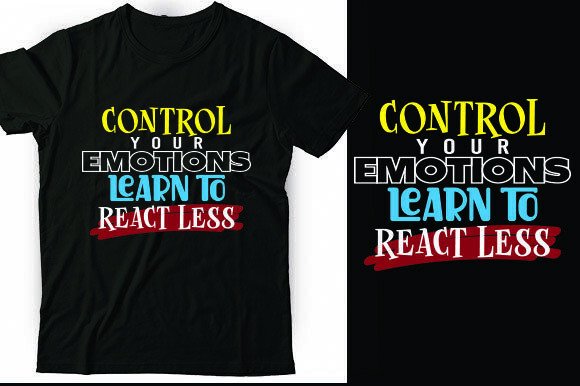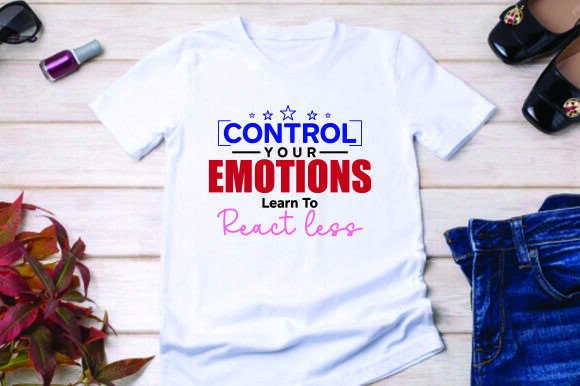
Control Your Emotions Learn to React Less
If you’ve ever walked away from a heated conversation wishing you’d paused before replying—or scrolled through social media only to feel your pulse rise at someone else’s opinion—you’re not alone. Control Your Emotions Learn to React Less isn’t just a clever phrase on a shirt—it’s a quiet, wearable reminder of an essential life skill: emotional agility. This design distills that idea into bold, clean typography—designed not just to look good on a tee, but to spark real reflection in everyday moments.
More Than a Slogan—A Practical Pause Button
At its core, Control Your Emotions Learn to React Less speaks to the gap between stimulus and response—the half-second where we choose whether to shout, scroll, snap back, or step back. It doesn’t ask you to suppress feelings. Instead, it invites awareness: *What am I feeling right now? What do I truly want to communicate—not just vent?* That distinction matters—in parenting, remote work, customer service, creative collaboration, or even navigating family dinners.
Where This Design Fits Real Life (Not Just Wardrobes)
Think about the nurse who changes shifts after a difficult patient interaction—wearing this shirt under her scrubs isn’t about hiding stress; it’s a gentle nudge toward grounding before walking into the next room. Or the teacher who prints it on a tote bag she carries into staff meetings—where tone, timing, and emotional regulation directly shape classroom culture. Even the freelance designer who pins it to their studio wall uses it as a checkpoint before sending feedback on a client’s third revision: *Am I reacting to fatigue—or responding to the work?*
It’s equally resonant for people in high-stakes roles—like HR professionals mediating conflict, startup founders pitching under pressure, or therapists modeling self-regulation for clients. In each case, the phrase isn’t about stoicism. It’s about creating space—between what happens and how you show up.
Who Finds Unexpected Value in This Design?
- Remote workers: When Slack pings pile up and tone is hard to read, wearing or displaying Control Your Emotions Learn to React Less helps reset digital communication habits—especially before hitting “reply all.”
- Parents of teens: It doubles as both personal anchor and subtle conversation starter—kids notice the message, and sometimes, that opens the door to talking about impulse, empathy, and pause.
- Coaches and trainers: Used on water bottles or workshop handouts, it reinforces behavioral frameworks like nonviolent communication or cognitive reframing—without jargon.
- Creative teams: Printed on studio mugs or shared drive headers, it gently challenges “hustle culture” norms that glorify reactivity over thoughtful iteration.
Why the File Formats Matter (Beyond Aesthetics)
This isn’t just another motivational quote PNG dropped into Canva. The included files—High-Resolution JPG, Editable AI, SVG, and Transparent PNG (4500×5400 @ 300 dpi)—are built for real-world flexibility:
- The SVG scales flawlessly for vinyl decals on laptops or car windows—no pixelation, no guesswork.
- The Editable AI file lets designers tweak spacing, swap fonts, or adjust weight for specific brand guidelines—say, softening the tone for a wellness clinic vs. sharpening it for a leadership retreat.
- The Transparent PNG drops cleanly onto product mockups (tote bags, ceramic mugs, notebook covers) for Etsy or Shopify listings—no background distractions.
- The JPG is print-ready for local screen printers or direct-to-garment services—crisp, balanced contrast, optimized for fabric dye absorption.
All files come compressed in one ZIP folder—no hidden layers, no missing fonts, no licensing surprises. Double-click to open. Drag, drop, adapt.
Things to Consider Before Using It
Like any tool rooted in emotional practice, context shapes impact. A shirt with Control Your Emotions Learn to React Less lands differently depending on setting and delivery:
- Avoid irony overload: Wearing it sarcastically during an argument undermines its intent—and can confuse or alienate others. Its power lies in sincerity, not snark.
- Know your audience: In some corporate environments, overt emotional language may feel too personal. Consider placement—inner seam tag, subtle sleeve print, or coffee cup instead of chest-front boldness.
- Pair with action: The design works best when matched with actual practice—like pausing for three breaths before replying to a tense email, or using the “24-hour rule” for non-urgent messages.
- It’s not suppression: If you’re using it to avoid addressing burnout, grief, or chronic stress, it may unintentionally reinforce emotional avoidance. True regulation includes naming, honoring, and channeling feelings—not erasing them.
Strengths That Go Beyond the Surface
What makes this design stand out isn’t novelty—it’s usability. Unlike vague affirmations (“Good Vibes Only”), it names a concrete, learnable behavior: *reacting less*. That specificity makes it teachable, measurable, and adaptable across formats:
- On a sticker stuck to a laptop lid: a micro-intervention during Zoom fatigue.
- As a print-on-demand mug for therapists’ waiting rooms: a silent invitation to breathe before session start.
- In a team Slack channel header: a lighthearted yet grounded norm for asynchronous communication.
- On a conference badge lanyard: a conversation starter about resilience in fast-paced industries.
And because it avoids clichés (“Choose Joy,” “Good Day Sunshine”), it appeals to audiences who value authenticity over polish—people who know growth isn’t always pretty, but it’s always possible.
Final Thought: It’s Not About Perfection—It’s About Practice
You won’t stop feeling frustration, disappointment, or urgency. And you shouldn’t. But every time you see Control Your Emotions Learn to React Less—on your chest, your screen, or your notebook—you’re reminded that you get to decide how much of that feeling becomes action. Not by shutting down, but by slowing down. Not by being “calm,” but by being clear. That shift doesn’t happen in grand gestures. It happens in the small, repeatable choices—like choosing which file format fits your next project, or pausing long enough to ask yourself, *What’s mine to carry—and what can I let go of right now?*